
For three years, Alberto Rosito has served as a brass teaching artist at Harmony Project’s Expo site in South Los Angeles. Growing up with his Salvadoran heritage and surrounded by a variety of Latin music, his musical and cultural background have influenced the way he approaches teaching. Drawing from his musical expertise and unique experiences, he hopes to inspire his students through the teachings of marching band, mariachi, full orchestra and group brass lessons. We asked him several questions about how his cultural identity shaped his musical journey.
What is your cultural background, and how has it inspired your musical upbringing and experiences?
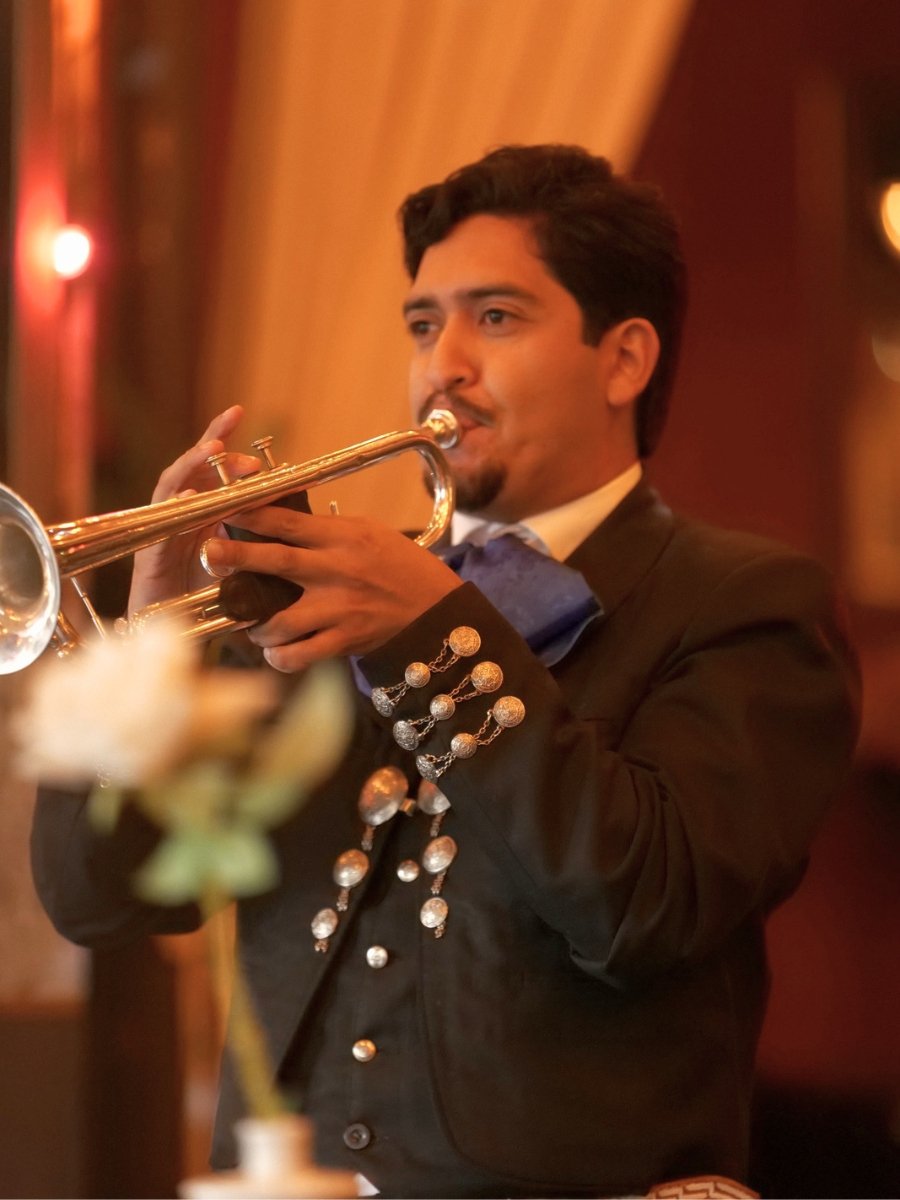
Alberto performing during one of his mariachi gigs. (Photo courtesy of Alberto Rosito)
My background is Salvadorian, so we usually get a lot of bachata, merengue, tropical musica, and we also get some of the Mexican music like rancheras, [and] mariachi music. To celebrate my own culture, I will often take tropicana gigs, or salsa and merengue gigs. It’s [the music] always just a bunch of high notes, sometimes three-part harmonies with trumpets and trombones and it’s great. And then everyone’s just actively having a good time, whether it’s us just being able to dance around to the music, and then just randomly turning around and playing our melody line to the party. It’s always been very, you know, [for] lack of a better word, lit. It’s just amazing to play.
What songs do you recommend that reflect Hispanic culture across different styles and regions?
One piece of music that I would recommend for you to listen to if you just want to get the feel of it would be anything by Vicente Fernandez. And in general, you can go just very classic standard: El Rey, which is “The King” in English. For me, my personal favorites would probably be more of the bolero side or huapangos. So for the bolero side, I would recommend Tres Regalos, which is “Three Presents” in English. Beautiful song, usually sung in three part or four part harmonies which is even better.
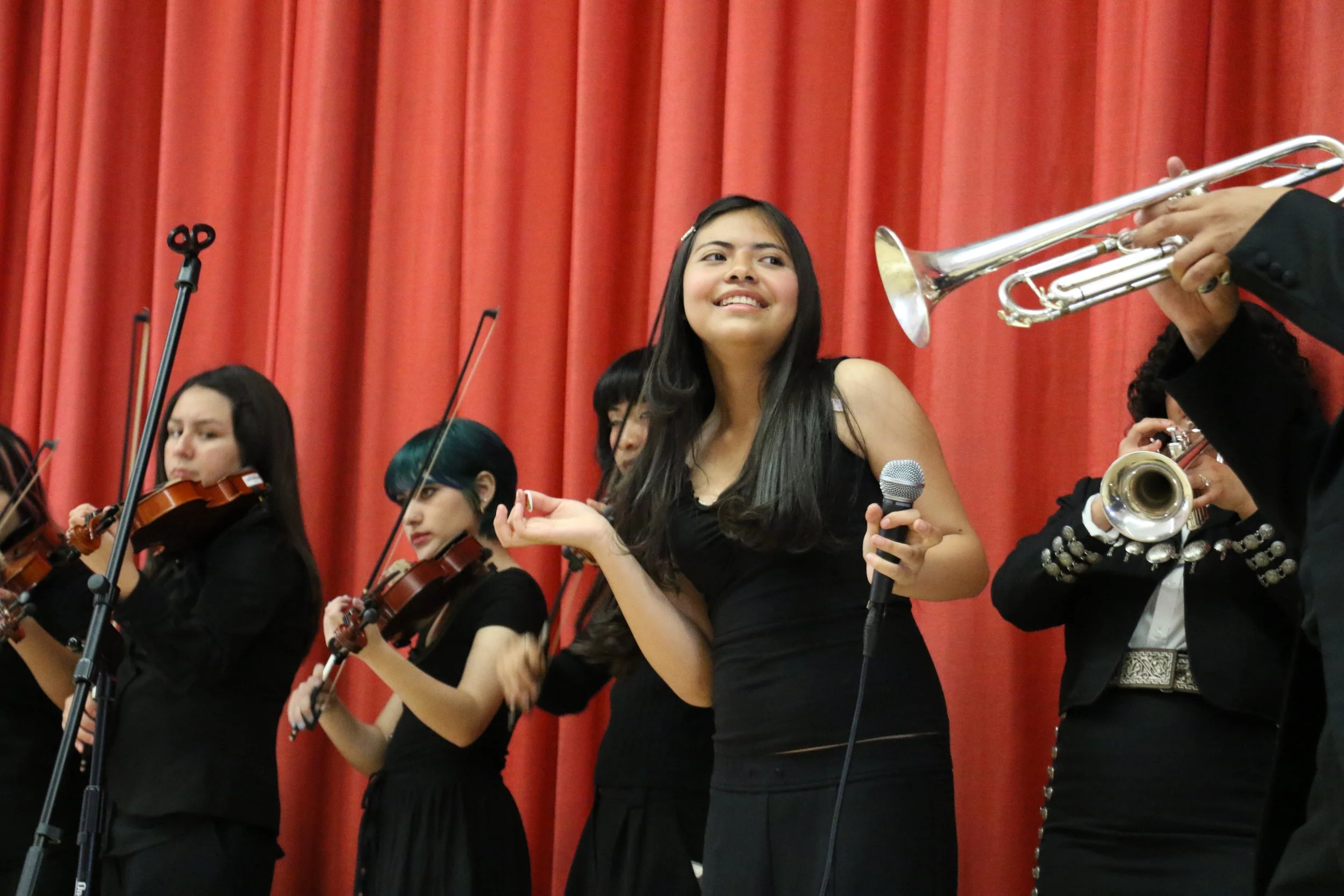
Harmony Project Expo mariachi ensemble performs during a concert.
The trumpets have also three and four part harmonies which is not really seen in mariachi music, but since it’s a bolero, [originated in] a different part of Latin America, they’re able to take a lot more liberties with it. So, you do have four part harmonies in the violins, four part harmonies in trumpets, three and four parts in the vocals which I think is much better than just hearing one person sing. And then like I said, huapangos, I would recommend Linda Ronstant just to listen to her sing, and those are also really good.
Why should kids have access to music education?
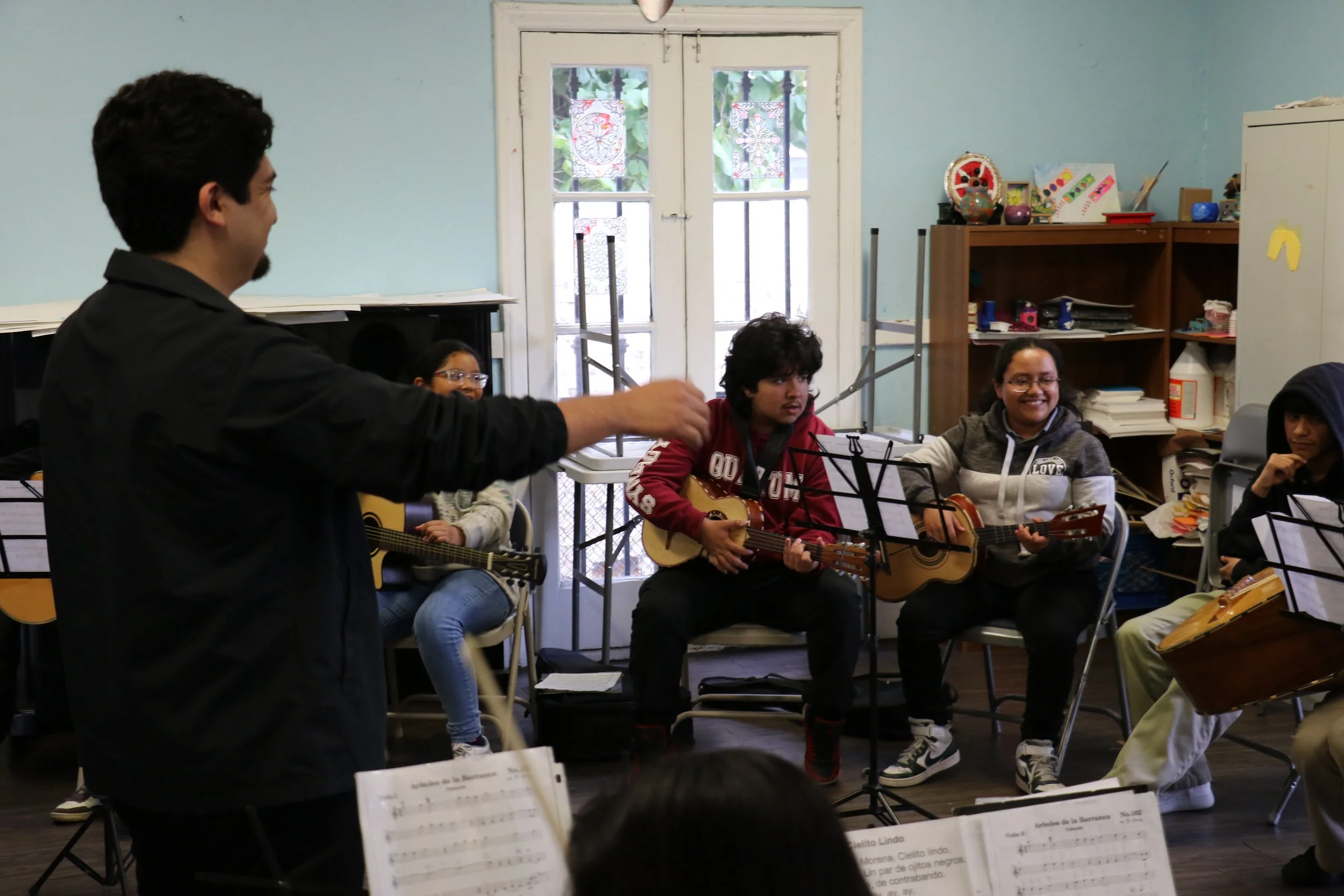
Alberto instructing his mariachi class at Los Angeles Department of Recreation and Park’s Expo Center.
Kids do deserve musical education, students or anyone in general, just because it gives them a source to be creative. I mean, we don’t even have to go into all the studies they’ve done throughout the years. It helps you think, relax and experiment, like this is the type of person I am. What would it sound like? That’s why I think music education is great.
Why is teaching important to you?
Teaching is important to me because it allows me to inspire my students. It also allows me to feed my ideas into someone else and see how that will help them blossom. And three, which is also part of my teaching philosophy. It helps me help them understand who they are and become a better version of themselves eventually later on throughout their lives.
Editor’s note: This interview has been slightly edited for length and clarity.
About Harmony Project:
Harmony Project is a nonprofit that provides high-quality music instruction and social support to children year-round at no cost throughout 51 community hubs in Los Angeles. As one of Los Angeles’ largest music education organizations, Harmony Project is dedicated exclusively to serving children from low-income families and under-resourced communities. Harmony Project envisions a world in which all students have equal access to opportunities to learn how to play music and the resources needed to thrive in college and beyond. Harmony Project’s holistic approach to student success has resulted in impressive outcomes with 98 percent of the graduating high school class accepted to a college or university during the 2025-2026 academic year.